

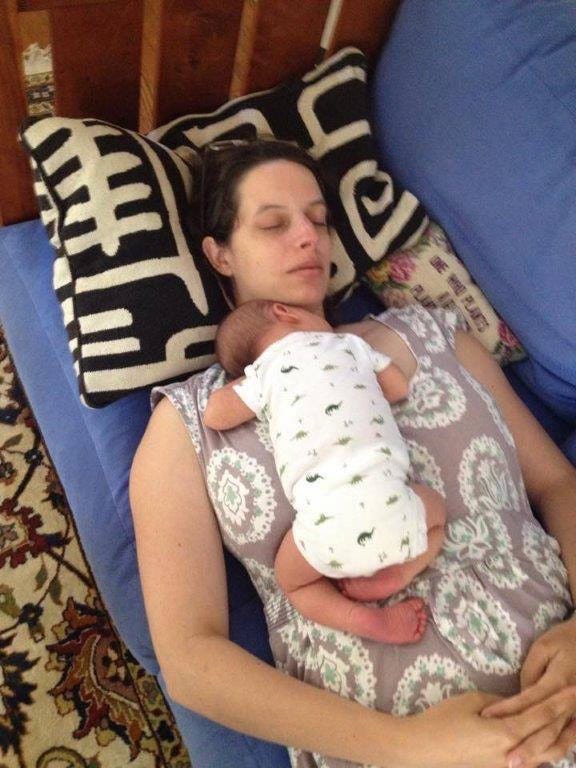
I was very touched to read a recent essay by Jerusalem Demsas in The Argument titled: “There’s no such thing as returning a child,” with the subtitle: “The paradox of progress.” It’s a lovely article, and I encourage you to read it, if you haven’t already.
The central theme of the essay is that Millennials are wary of having children because it is a high-variance decision. According to Demsas, the technology and cultural advancements of the twenty-first century certainly have significantly decreased the risk of having children: child mortality rates have dropped significantly, and women’s workforce participation means becoming pregnant doesn’t bar a mother from accessing paid work. Still, per Demsas:
Even with these gains, there is no other single decision that immediately opens you up to the type of risks that becoming a mother does from long-term health consequences to economic consequences to a loss of freedom. Fathers, too, face an immediate shift in responsibilities, expectations, and identity that can happen, quite literally, overnight.
Since I’ve had five pregnancies, and have four children, I’m extremely sympathetic to the argument that having children is a high-variance decision. As a religious Catholic and a homeschooling mom, I know many women who have four, five, six … or more …kids. I’m very aware of all the risks and sacrifices that go along with pregnancy, births, and raising children. It’s not easy to have kids, that’s for sure. Indeed, it’s the hardest thing I’ve ever done. As Leah Libresco Sargeant put it in her wonderful essay, Overlapping Ribbons, babies are a big “no” to many things:
Children come with a million “nos” attached. The career hits are the easiest to quantify, but they’re not the only ones. In my own life, no, I will not take that fascinating but time-intensive job when I’m three months pregnant. No, I will not start working on a next book proposal while I am still getting up in the night to breastfeed my son. And, more painfully, no, I will not log the hospice hours my mother and my brother did as my father died, because I have a toddler to take care of and a baby on the way.
The nos only make sense when they’re for the sake of a big yes.
After reading Demsas’ essay, I wanted to pull out what Sargeant calls the “big yes,” and give a few reasons why the decision not to have children is also high variance.
To be clear: I’m not listing these reasons to convince anyone to have a first baby — or another baby. The vocation of motherhood is (in my opinion) a highly personal one. Some people are called to be parents, and others are not … or, alternatively, they never find the right spouse to make children achievable or desirable for them. Not everyone wants to or is able to have children, and childless people contribute many wonderful things to our society.
Also: This is not meant to be a comprehensive list of reasons to have children. For a full length consideration of the subject, I enjoyed Bryan Caplan’s Selfish Reasons to Have More Kids. For a beautiful essay on some of the moral and philosophical reasons to have children, I enjoyed Ross Douthat’s The Case for One More Child. As a counter-weight, if you want an essay on reasons to affirmatively not have children, I would recommend Anne Pachett’s moving essay, There are no children here, from her collection of essays titled These Precious Days.1
Here, I just want to give a few considerations as to why deciding not to have children is also high variance.
Resisting mono-focus in life: Although children are (rightfully) understood as certain to draw energy and attention away from paid work, they are an extremely helpful counterpoint to a tendency I have observed in Millennials and Gen Y’ers who attend elite schools: the tendency to focus on work as the central activity in life. Work is important, of course. It provides an important source of meaning and direction … not to mention, it pays the bills.
However, as Daniel Greco, a philosophy professor, has pointed out,2 it’s extremely important to cultivate sources of meaning that are not comparative or goal oriented. Trying to derive all your meaning from work, or how much money you have, or the like, is often ultimately frustrating because it leads to comparisons and the hedonic treadmill. Parenting can be one such non-hedonic treadmill, non-competitive source of meaning. As he writes in How to Cheat the Thief of Joy:
There are plenty of other people who are better than me at philosophy, or (not and!) jiu jitsu. But nobody could be a better father to my children than me.8 By and large, the ups and downs of parenting have nothing to do with anybody else’s parenting. When I take my baby and toddler to the playground, and the toddler demands the baby be put in the swing next to her and be given a big push just like she gets, and then they both laugh their heads off, the joy I get is not in the least diminished if another couple of kids are having a very similar experience with their parent a few swings down. When I rewatch the adventure movies I loved as a child—Indiana Jones, The Princess Bride, Willow—with my two older children, and then they spend the next week reciting their favorite parts, I’m happy if I hear that my buddy’s kids also loved them.
This doesn’t mean that children are the only possible counter-balance to what can be an overwhelming draw of work. However, it is very important to have such a counter-weight, and children are a good one. While working conditions have improved for many people in the twenty-first century, the rise in technologies like cell phones and emails mean that — especially for white collar professionals — it is all too easy for work to invade almost every waking hour of one’s day; swallowing up your entire life if you aren’t careful.
Expanding your connections throughout generations
I homeschool my children, but am definitely not — unlike some homeschoolers — opposed to public schools. There’s lot of great stuff public schools provide to their students and communities. One problem of public schools, however, is that they do kind of ingrain the sense that your correct peer group is people of the same age. (I know this having attended public school from kindergarten through twelfth grade myself). Having friends that are around the same is age is great and important, of course. However, it is narrowing when these are the only people you interact with outside of work.
Children will do a great job of breaking you out of the mold of only socializing with people approximately your age. Obviously, your kids are a generation younger than you, and … if given the opportunity … will almost certainly be delighted to introduce you to the music, books, electronic media, speech patterns, cultural references, and much else of their generation. Indeed, the problem may be getting them to stop talking about that stuff (depending on the child).
They also draw in surrounding generations. You probably will interact with your older relatives - parents, grandparents, aunts, etc. - in a different and more expansive way if you have children. Without children, you might see your older parents infrequently. Once babies arrive (in many families, anyway) your parents may come as often as possible - or you will go to them as often as time permits. If you have siblings, that relationship will also likely change and expand due to your children.
Beyond that, I’ve often found that older people in my neighborhood will want to stop and chat about the kids; they also enjoy watching my children grow up. One older woman who lives nearby told me that (unlike others) the young moms almost always stop to talk to her. Other people don’t stop to talk, she told me, leaning on her cane, but the parents do.
And it keeps going. You’ll probably interact more with people not your age through your children’s teachers, local librarians, sports coaches, etc. The librarians at the local libraries we frequently visit are a mix of ages, and after a decade or so, I know many of them and we talk frequently — I love getting to hear about what’s going on in their lives, and in the library world. Through Mom’s Groups and our local church, I get to talk to older and younger moms, and get perspective on what is happening at all the different stages of motherhood. Should you have grandchildren one day, that is one more source of connection to younger generations.
Again, of course, it’s possible to achieve these connections to other generations without having children. But I think it’s harder. Especially if you don’t have nieces, nephews, or younger cousins, long-term connections to children unrelated to you can be quite challenging. I’m not saying it’s fair or right, but I do think that is a fact of life in the United States in 2026.
Passing along something to future generations
I turned 40 in July, and have spent time in the months since then reflecting on what it means to be entering middle age, and — at least statistically — completed half my life span. I’m also helping some older relatives handle issues surrounding a will for an even older relative. This sort of thing (naturally, I think) causes you to consider what you are handing on to the next generation …. and what you are not.
When I was thinking about having babies in my 20s, it wasn’t really salient to to me that I would care in my 40s about what I was going to leave behind for the people come after me. But now that I’m in my 40s, I certainly do. No matter how good we are at our jobs, it’s really hard to create something durable that will last. Some people do, of course, but they’re few and far between. However, children are a sort of ark you send into the future with not only the genetic material of your family, but all the love you’ve poured into them, all the books you’ve read together, all the Star Trek shows you’ve talked about, and so forth. I don’t mean to say children should be a project where you try to shape them like a work of art — I’m really opposed to that sort of parenting. They are their own people! But helping them understand who they are, and get ready for who they are going to become as adult is a way of sending something important into the future — taking a gift that was given to you, and passing it on.
Again, this role is not restricted to parents. School teachers, sports coaches, music teachers, religious education teachers … I’m grateful for the influence of all these people in my children’s lives, and the way they are teaching and guiding my children. It’s not necessary to be a parent to be deeply influential in the lives of young people. But, again, it’s a little harder. If you are a teacher with a class of 30, it can be hard to pick out the students that you really had an impact on. That’s not to say you didn’t, but the direct line can be hard to figure out. Children offer something meaningful you leave behind, and that is something you think about as you start to confront the fact that, yes, your hair is probably around 15% gray now, and yes, those really are a few (early!) wrinkles on your face.
When considering children, in other words, you can’t assess whether and how it’s a high-variance decision without considering your (likely) full lifespan. When young, you may start thinking about the negative impact they’ll have on your work and social life. In middle age, if you don’t have kids, you may start confronting deeper questions about meaning you’ve cultivated outside of work, cross-generational connections, and what you’re passing along to the future. Adults without children can confront these questions head-on, and tackle them. But it’s harder. And the downsides if you don’t are, unfortunately, significant - maybe even more significant than whether you have a great job or plenty of money in the bank.
In terms of my own writing, I have a couple of newer publications I’d like to share with you:
For The Argument, my colleague Elliot Haspel and I wrote about literacy, in the essay Are most Americans illiterate? We do a deep dive into literacy statistics, but also make the pitch for reading whole books in schools — sadly less common than it used to be. We argue shared understanding of literary works is important in democracies as as a way to create both intra and inter generational connections.
I wrote for the Daily Wire an essay titled The Workforce Flip That Could Change Marriage, Family, And The Future Of Men. The essay argues that men’s declining workforce participation is indeed a serious problem, but it’s a mistake to understand men’s jobs as being lost because women are succeeding. Instead, this phenomenon is due to the American economy shifting more towards sectors traditionally dominated by women (like healthcare) and away from those traditional dominated by men (like manufacturing).
Over at The Dispatch, I wrote a little piece about the Nathan Hale statute at Yale. Titled A True American at Yale, it’s about the history of Hale, the statute, and also the lessons it’s taught me and my children about patriotism and the through-lines that run through the American story.
I’d also like to share that my dear friend, Dixie Dillon Lane has her first book, Skipping School: A History of American Homeschooling and How It Went Mainstream available for pre-order. Dixie is a historian and homeschooler herself. I am reading an advance copy right now, and heartily suggest it if you are interested in homeschooling and also in education in the United States!
I have paid subscriptions enabled on this Substack, but would be most pleased if in lieu of paying me, you would make a small donation to the Connecticut Diaper Bank. The link is: https://thediaperbank.org
This essay is not available online; you will have to buy Pachett’s book to read it. However, I can attest that it is well worth it.
Disclosure: Greco and I recently celebrated 22 years since our first date at the Yale College Debate Tournament, so I am not unbiased regarding his work.
I love the reasons you've named! I wanted to comment on the first one though--monofocus. You said this: "Parenting can be one such non-hedonic treadmill, non-competitive source of meaning." I would point out that parenting can also cause extreme "monofocus" for some people, more often mothers.
Sometimes this group is very focused, and even competitive, about their way of parenting. I see this in a lot of the online discourse, aka "The Mommy Wars" where various people post takes about how great their kids have turned out, all thanks to such-and-such parenting decision (eg. breastfeeding, homeschooling, co-sleeping or sleep-training). And I also have friends/family members who seem obsessed with their children, always wanting to compare and compete, boasting and posting about their children's academic and athletic accomplishments (last year a friend posted all her HS daughter's AP exam scores on Facebook!) Sometimes these people do not adjust well to when their children grow up and need them less.
I think about this a lot as one of the reasons some people are quite turned off by parenting, and why people like Demas may view it as a "high variance decision." This kind of implies that there is one right "product" that you need to get when you have a child, and you can't necessarily be sure you will get, so therefore having a child is a big risk! She talks about an early career plan changing at the last minute, but at the end of the day, it would all be fine because she was ultimately an educated, capable young person with the support of her family.
And I guess I think, isn't the same basically true of becoming a parent? Your kid may surprise you in good and bad ways. They may have some health or developmental problem. But in the end, it is highly highly likely that you will love them and think they are a wonderful addition to your life. So, how is this a "high variance decision?"
Anyway, I just wish we would more often name high/unrealistic expectations of modern parents as the culprit to making people decide not to have them!
Thank you Ivana, I really appreciate your thoughts on children. You are right on the mark and many of your lines resonate deeply with me. I grew up in a family of 9 children, loved it, and never thought that there was much unusual about it. Then my wife and I had 6 children, each one different and unique and experienced many joys and challenges. We also lost one son, which I told about in this essay https://kirkwareham.substack.com/p/the-mending-cycle
Again, your essay meant a lot to me. Thank you, Kirk